Lake Sammamish Guide
West Lake Sammamish Waterfront
By Colin Dalrymple
Written by Colin Dalrymple, Managing Broker, Windermere Real Estate.
Last updated . Figures checked against the source Northwest MLS export before publishing.
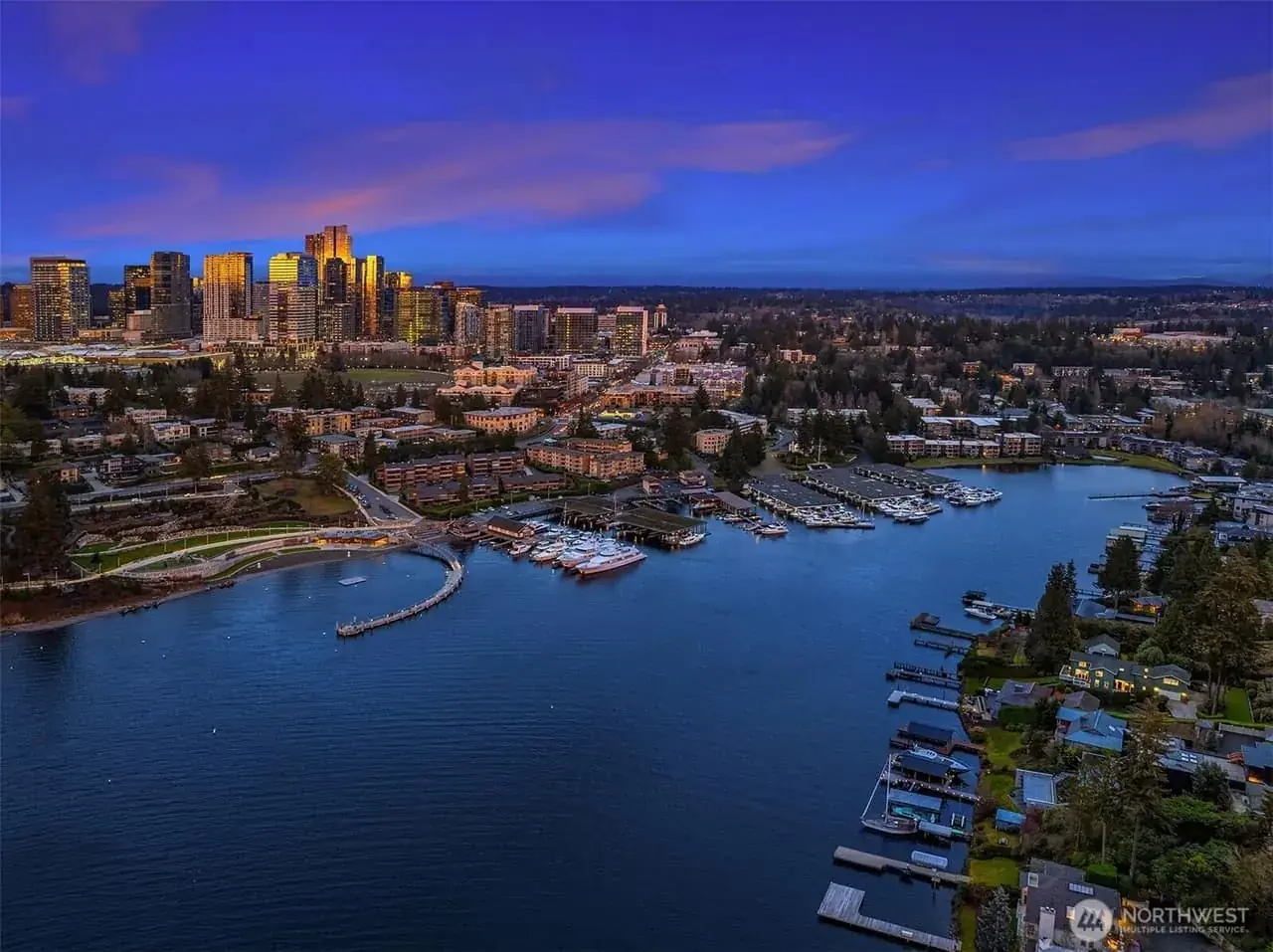
The west shore of Lake Sammamish is its own market. It faces the morning sun across the water, it is the shortest drive to downtown Bellevue of anywhere on the lake, and the homes along West Lake Sammamish Parkway run from original lake cabins to full modern rebuilds on the same block.
Most addresses here carry a Bellevue or Issaquah mailing address, and that matters more than it sounds. The city holding jurisdiction is the office that decides what can happen at your water, so confirm it before assuming anything about a dock, a bulkhead, or a rebuild.
Closed Sales, August 2025 through July 2026
What Lake Sammamish as a whole actually sold for
Sales inside West Lake Sammamish alone are too few to publish as a separate statistic, so these figures cover Lake Sammamish as a whole.
Median sale price
$4,425,000
20 closed sales
Middle half of sales
$2.7M to $6.1M
25th to 75th percentile
Median per sq. ft.
$1,155
finished square footage
Median days on market
38
sold at 95.4% of original list
Full range across the period: $1,800,000 to $13,000,000. Frontage is what separates the bottom of that range from the top, how much of it, how it meets the water, what faces the afternoon sun, and whether the dock and shoreline are permitted as built.
Compiled by Colin Dalrymple from Northwest MLS sold records for detached waterfront homes closed in the period shown. Condominiums, townhomes and moorage-only sales are excluded. These are not official NWMLS statistics. Waterfront is thinly traded, so treat any market with fewer than ten sales as directional rather than definitive, and price a specific property off its own frontage, orientation and condition.
Confirmed with the City
What is on the record
The City of Bellevue has frontage on the west shore of Lake Sammamish and administers shoreline permits under Land Use Code 20.25E.
Source: Bellevue Shoreline Substantial Development Permit →The City of Issaquah holds the south end of the lake and processes shoreline and building permits through its Permit Center.
Source: City of Issaquah Permitting →Bellevue, Issaquah, Sammamish and Redmond are each listed shoreline jurisdictions under Washington's Shoreline Master Program requirements for King County.
Source: WAC 173-26-080 →Parcels on the lake that sit outside any city limit are permitted by King County Local Services, Permitting Division, rather than a city department.
Source: King County Permitting →Lake Sammamish is not part of the Chittenden (Ballard) Locks system that seasonally manages Lake Washington's level.
Source: USACE, refilling Lake Washington for summer →
Anything not stated above is intentionally left out. Dock dimensions, bulkhead replacement rules, setbacks, and in-water work windows are decided per property and per project, so the right answer comes from the office below rather than from a summary.
Verify It Yourself
Who to call
City of Bellevue, Development Services (Issaquah Permit Center: 425-837-3100)
Governing code: Bellevue Land Use Code 20.25E
Applies Everywhere
State and federal layers
A state permit sits underneath every city permit
In-water and near-shore work in Washington needs a Hydraulic Project Approval from the Department of Fish and Wildlife, issued under RCW 77.55 and WAC 220-660. It is separate from your city permit, and it is applied for through WDFW's online APPS portal, where your project is routed to an area habitat biologist.
Source: WDFW Hydraulic Project Approval →Cities administer shoreline rules, Ecology oversees them
Each shoreline jurisdiction writes and administers its own Shoreline Master Program under the Shoreline Management Act (RCW 90.58, WAC 173-26 and 173-27). Which city you are in genuinely changes what is allowed, so the city's own program is the document that governs your dock, your bulkhead, and your setbacks.
Source: WA Dept. of Ecology, Shoreline Master Programs →Federal review applies in the water itself
Work below the ordinary high water mark also falls under U.S. Army Corps of Engineers jurisdiction. The Seattle District Regulatory Division can confirm whether a specific dock, lift, or bulkhead project needs federal authorization: (206) 764-3495.
Source: USACE Seattle District Regulatory →Lake Washington's level is managed seasonally, Lake Sammamish is not
The Corps of Engineers holds Lake Washington near a 20-foot winter target elevation at the Chittenden (Ballard) Locks and refills it to a 22-foot summer target, beginning around mid-February and reaching summer level by roughly April 1. Lake Sammamish is not on that system, so the two lakes behave differently through the year.
Source: USACE, refilling Lake Washington for summer →Reading a Listing
No-bank, low-bank and what they mean
- No-bank
- Used for property where the lawn or patio meets the water with essentially no drop, so you step from the yard to the shoreline without descending. It is the most sought-after configuration on both lakes and it usually carries the largest premium.
- Low-bank
- Used for a modest step down from the main yard to the water, walkable without stairs or with only a few. In practice buyers group no-bank and low-bank together when what they care about is easy access with small children.
- Medium-bank
- Used where reaching the water means a real descent, typically a stairway. Often buys more privacy and better views for the money than a comparable low-bank home.
- High-bank
- Used for significant elevation above the water, where access is a long stairway or a tram. View-forward rather than water-access-forward, and priced well below no-bank frontage on the same lake.
These labels come from how brokers and listings describe property, not from any code. Two agents can label the same shoreline differently, and no city measures or certifies the categories. Treat them as shorthand for a conversation, then confirm the actual grade by walking the property.
Common Questions
West Lake Sammamish waterfront questions
Across 20 detached waterfront homes closed in Lake Sammamish as a whole between August 2025 and July 2026, the median sale price was $4,425,000, with the middle half of sales between $2.7M to $6.1M and a full range of $1,800,000 to $13,000,000. Median price per finished square foot was $1,155. Compiled from Northwest MLS sold records and not an official NWMLS statistic. Sales inside West Lake Sammamish alone are too few to publish as a separate statistic, so the figures cover Lake Sammamish as a whole.
Permitting for shoreline work in this market runs through City of Bellevue, Development Services (Issaquah Permit Center: 425-837-3100). The governing rules are in Bellevue Land Use Code 20.25E. You can reach the office at 425-452-4898, and the official page is linked on this guide.
No. Lake Sammamish is not part of the Chittenden (Ballard) Locks system that the Army Corps of Engineers uses to manage Lake Washington's level, so the two lakes do not behave the same way across a year.
Pull the property's permit file from City of Bellevue, Development Services (Issaquah Permit Center: 425-837-3100) during feasibility, before the contingency period closes. Dock dimensions, bulkhead replacement rules, setbacks, and in-water work timing are decided per property and per project, so the city's own record is the only reliable answer.
Questions that are answered the same way on every lake, state and federal permits and what the bank terms mean, are covered once in the Eastside waterfront guide.
West shore is what people picture when they say they want morning light on the water and a fifteen minute drive to Bellevue. Before anyone gets attached to a specific house, I confirm which city holds jurisdiction and pull the shoreline permit history, because that one answer shapes what a buyer can change later.
Keep Exploring
Related to West Lake Sammamish Waterfront
Part of Lake Sammamish.
Waterfront
Lake Sammamish
Compare the east and west shores of Lake Sammamish before shopping a specific stretch of frontage.
Waterfront
East Lake Sammamish Waterfront
Buy or sell waterfront specifically in East Lake Sammamish: frontage, dock rules, and what it sells for.
Waterfront
Lake Sammamish Waterfront
Buy or sell waterfront specifically in Lake Sammamish: frontage, dock rules, and what it sells for.