
MAKING YOUR MOVE
The Relocation Guide
By Colin Dalrymple
At a Glance
A Quick Summary
A step-by-step guide for buyers relocating to Bellevue, Kirkland, Redmond, Sammamish, and Mercer Island.
Most moves fail on sequencing, not on price: touring, financing, schools, and closing all have to line up in the right order.
Below: what to do in each phase, who to talk to, and how to compress the timeline without taking risk.
Meet Your Relocation Specialist
Whether you're moving across the state or across the globe, Colin specializes in helping buyers relocate to Seattle's Eastside through a thoughtful, well-coordinated process.
As a Certified Relocation Specialist, he combines in-depth local knowledge with trusted professional relationships to help clients navigate financing, neighborhoods, inspections, closing, and the many details that come with relocating to a new community.

Step 1
Build Your Team & Establish Financing
One of the first steps in any relocation is assembling your professional team and establishing your financing strategy. Starting these conversations early gives you time to understand your options, coordinate your move, and be ready to act when the right home becomes available.
Depending on your circumstances, your team may include:
Real Estate Broker with Relocation Experience
Your broker serves as the central point of coordination throughout the relocation process, helping you navigate neighborhoods, market conditions, timelines, and the home-buying process from start to finish.
Lender
If you'll be financing your purchase, meet with a lender as early as possible. Your lender can review financing options, issue a pre-approval, and, whenever possible, fully underwrite your loan before you begin your home search. Having your financing in place before touring homes allows you to act quickly when the right property becomes available.
Certified Public Accountant (CPA)
A CPA can advise on tax planning, residency considerations, capital gains, and other financial implications related to your move.
Real Estate Attorney
A real estate attorney can assist with ownership structures, trusts, contracts, title questions, and other legal matters.
Immigration Attorney (International Relocations)
International buyers should consider consulting an immigration attorney regarding visa status, residency requirements, and other legal considerations that may affect financing or homeownership.
Other Trusted Professionals
Throughout the relocation process, you may also work with title and escrow professionals, home inspectors, movers, contractors, painters, landscapers, and other local service providers. Colin can connect you with a trusted network of professionals to help coordinate every stage of your move.
Financing Before You Buy
If you plan to finance your purchase, begin the process as early as possible. Gathering financial documentation, verifying income and assets, and completing underwriting can take time. International buyers may also need to coordinate currency exchange, international fund transfers, source-of-funds documentation, or cross-border lending requirements.
While a pre-approval is generally expected before submitting an offer, many lenders can take the additional step of fully underwriting your loan before you begin shopping. A fully underwritten approval provides greater certainty and can strengthen your offer in a competitive market.
Your lender can also explain Washington's purchase process, including:
- Earnest money
- Escrow and title
- Financing contingencies
- Typical closing timelines
Additional Considerations for International Buyers
Cross-border financing and fund transfers
Coordinate international banking, currency exchange, source-of-funds documentation, and wire transfers well in advance.
Ownership structure and tax planning
Property ownership, immigration status, tax residency, rental income, and estate planning are separate issues that should be evaluated with your CPA and attorney.
Remote documentation
Passport identification, notarization requirements, time zone coordination, and powers of attorney may require additional planning.
FIRPTA
If purchasing from a foreign seller, the transaction may be subject to the Foreign Investment in Real Property Tax Act. Your escrow and title team should identify any withholding requirements early in the transaction.
Step 2
Determine Your Timeline
Every relocation is different. Some buyers have several months to plan, while others receive a job offer and need to relocate within a few weeks. Your timeline influences every step of the process and should be discussed before beginning your home search.
Important considerations include:
- Corporate or employment start date
- School start dates
- Sale of your current home
- Lease expiration
- Travel schedule
- Whether you'd like to rent before purchasing
- Flexibility with your move
For many buyers, the full process, from initial consultation through move-in, takes about 30–90 days. Cash buyers who are prepared to move quickly may complete the process in 30–45 days, while buyers using conventional financing should generally plan for 60–90 days. International relocations, contingent sales, or more complex financing can take 90–180 days or longer.
Week 1
Plan, Prepare & Assemble Your Team
Weeks 2–3
Learn the Eastside Market & Tour Homes Virtually
Weeks 3–5
Visit the Eastside & Tour Homes
Weeks 4–6
Offer, Inspection & Mutual Acceptance
Closing
Cash: 10–21 Days • Financing: 30–45 Days
Move-In
Possession & Settling In
Step 3
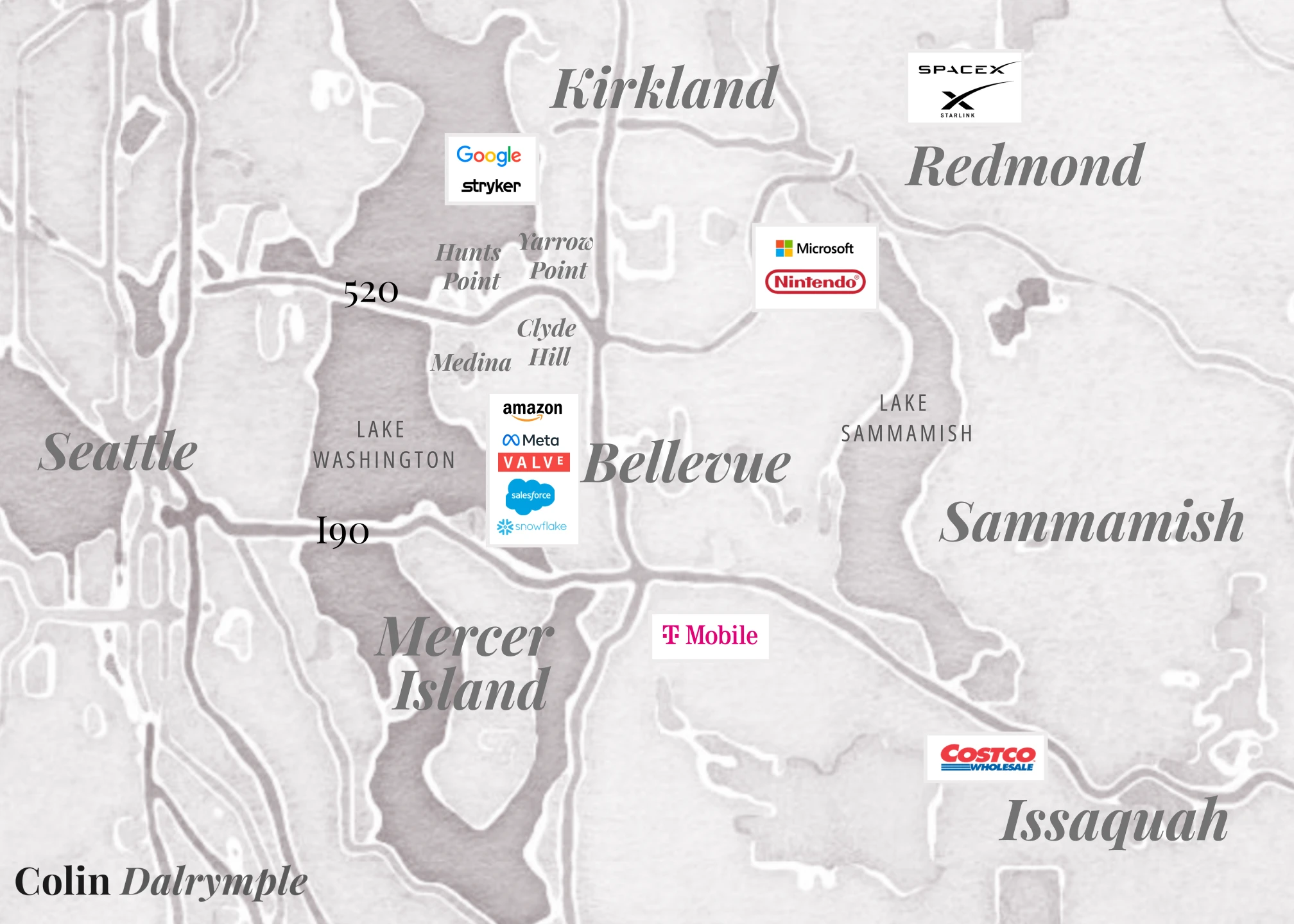
Learn the Eastside Market
Choosing the right neighborhood is just as important as choosing the right home. Our neighborhood guides provide an in-depth look at the communities, lifestyles, schools, and market characteristics that make each area unique.
Washington Buyer's Guide
Buying a Home in Washington
If you're relocating from another state or country, you'll quickly discover that Washington's home-buying process differs from many other parts of the country. Understanding these differences before you begin can help make your move more predictable and reduce surprises once you've found the right home.
Washington Buyer Essentials
A few aspects of the Washington purchase process are worth understanding before you begin your home search:
Buyer Representation Agreement
Washington law requires a written buyer representation agreement before (or shortly after) brokerage services begin. This agreement outlines the services provided, the length of the relationship, compensation, and agency representation.
Seller Disclosures
Most residential sellers provide a Seller Disclosure Statement (commonly referred to as Form 17) outlining their knowledge of the property's condition. While this disclosure is an important part of the transaction, it should never replace independent inspections and due diligence.
Escrow & Title
Unlike many states where attorneys handle the closing, Washington transactions are typically coordinated through independent escrow and title companies. Your escrow officer manages the closing process, document signing, and transfer of funds.
Review Periods
Certain documents, including seller disclosures and condominium or HOA resale documents, have statutory review periods. Understanding these timelines early helps buyers stay organized, especially when purchasing remotely.
Property Taxes & Closing Costs
Washington property taxes are administered by each county and paid twice per year. Your broker, lender, and escrow officer will review estimated closing costs, tax prorations, and other transaction expenses before closing.
Property Due Diligence
Every home deserves a thorough evaluation, but buyers relocating from out of the area should pay particular attention to items that may differ from their previous market.
During your home search, Colin helps buyers evaluate questions such as:
- Is the home served by public water and sewer, or does it have a private well or septic system?
- Are there drainage, flooding, slope, shoreline, or other environmental considerations?
- Were additions, decks, accessory structures, or finished spaces properly permitted?
- Are there HOA rules, rental restrictions, special assessments, or insurance considerations?
- For rural properties, what should you know about internet service, road maintenance, wildfire risk, or septic maintenance?
Virtual tours are an excellent way to narrow your search, but they cannot replace careful due diligence. Once you've identified the right property, inspections, document review, and local expertise become essential parts of the buying process.
Waterfront Properties Require Additional Due Diligence
Waterfront homes on Lake Washington and Lake Sammamish offer an exceptional lifestyle, but they also involve additional considerations beyond a traditional home purchase.
Before purchasing a waterfront property, buyers should verify:
- Waterfront ownership and shoreline rights
- Dock, moorage, and boat lift permits
- Shoreline regulations and future improvement restrictions
- Bulkheads, retaining walls, drainage, and erosion conditions
- Flood, landslide, and critical-area designations
- Septic systems, utilities, and shoreline infrastructure
- Shared waterfront agreements, easements, or HOA restrictions
Because every waterfront property is unique, ownership rights, development potential, and shoreline improvements should always be verified through title, permits, local jurisdiction, and the appropriate professional inspections.
Step 4
Touring Homes
Colin combines virtual tours, live FaceTime walkthroughs, and in-person showings to create an efficient home search, allowing clients to confidently evaluate properties from anywhere in the world.
Before you travel, Colin can preview homes on your behalf, evaluating each property with a critical eye for construction quality, craftsmanship, layout, natural light, privacy, and overall condition, looking beyond what listing photos can show. His detailed video walkthroughs and thoughtful observations help refine your shortlist, ensuring your time in Seattle is spent touring the homes most aligned with your goals.
Step 5
Make an Offer
Once you've found the right home, Colin will guide you through offer strategy, negotiations, inspections, and contingency planning based on the property and current market conditions. Nearly every document can be signed electronically, allowing you to move forward without needing to remain in Washington throughout the transaction.
Step 6
Closing
After mutual acceptance, the transaction moves through financing, appraisal, title, escrow, and final closing preparations. Most of these steps can be completed remotely, and Colin coordinates closely with your lender, escrow officer, and other professionals to help keep everything on track through closing day.
Step 7
Moving In
The transition doesn't end at closing. Colin can help coordinate local service providers, including movers, contractors, painters, landscapers, utility providers, and other trusted professionals to help make your move as smooth as possible. Whether you're arriving the day after closing or several weeks later, you'll have local support as you settle into your new home.
Frequently Asked Questions
Questions Answered
Every move is different, but most buyers spend several weeks planning, touring homes, making an offer, and closing. Cash purchases may close in as little as 10–21 days after mutual acceptance, while financed purchases typically take 30–45 days.
Not necessarily. Much of the process, including financing, virtual tours, negotiations, and document signing, can be completed remotely. Many buyers only visit once to tour homes, while others purchase entirely from out of state.
No. Many buyers attend inspections virtually. Your inspector can review findings by phone or video, and Colin can be present to discuss the inspection and answer questions.
Usually not. Most closing documents can be signed electronically or through a local notary, allowing many buyers to close from another state or country.
As early as possible. Obtaining a pre-approval, or ideally becoming fully underwritten, before you begin touring homes allows you to move quickly when the right property becomes available.
Every season offers different advantages. Spring brings the largest selection of homes. Summer is ideal for families moving between school years. Fall often means less competition and motivated sellers. Winter typically has fewer buyers, which can create opportunities.
Most relocation buyers spend two or three days touring homes, exploring neighborhoods, driving potential commutes, and visiting schools or local amenities.
Yes. Colin can tour homes on your behalf, provide detailed video walkthroughs, and evaluate each property for construction quality, layout, natural light, privacy, neighborhood characteristics, and overall condition. This helps narrow your search before your visit.
The right neighborhood depends on your priorities, including commute, schools, lifestyle, recreation, walkability, and housing preferences. Our Eastside Neighborhood Guides provide an overview of each community to help you determine which areas best fit your goals.
Yes. Colin has built relationships with trusted local professionals, including lenders, CPAs, real estate attorneys, inspectors, contractors, painters, landscapers, movers, and other service providers to help make your transition as seamless as possible.